
Carbon fiber filament isn’t just “tough”—it’s abrasive. Over time, that abrasiveness enlarges and changes the nozzle opening, which then changes flow behavior, surface finish, and how repeatable your dimensions are.
This guide ranks nozzle materials for FDM carbon fiber wear (brass, hardened steel, tungsten carbide) and explains how coatings fit in. You’ll also get practical “upgrade when…” rules so you don’t pay for a premium nozzle until it actually helps.
How carbon fiber wears an FDM nozzle
- A nozzle that starts flow-consistent but gradually becomes more permissive (filament extrudes more easily than before)
- Layer lines getting rougher or more inconsistent
- First-layer width and hole diameters drifting over time
- More sensitivity to temperature and speed (small changes have bigger effects)
The key takeaway: nozzle wear isn’t always immediate. You might print many successful parts on day one, then notice quality decay partway through a longer run.
Brass nozzles for carbon fiber filament: short life, frequent recalibration
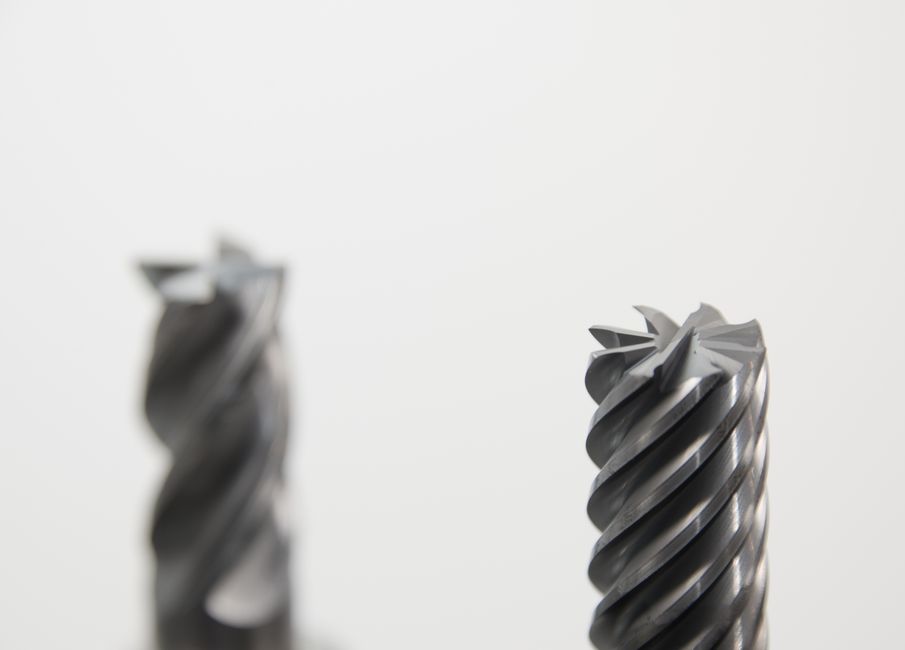
What to expect
With carbon fiber, brass typically shows the earliest signs of wear: the nozzle orifice can slowly enlarge, and the surface finish inside the nozzle becomes less stable. That usually translates into:
- Gradual change in extrusion consistency
- Faster drift in dimensional accuracy
- More frequent need to re-tune flow (and sometimes temperature)
When brass is reasonable
Brass can still make sense if you’re:
- Testing material or profiles rather than running long production batches
- Printing where dimensional tolerances are not critical
- Willing to treat nozzle replacement as a routine consumable
If you do keep brass, plan for more frequent swaps and calibration updates than you would with harder materials.
Hardened steel nozzles for carbon fiber filament: the practical middle ground
Hardened steel is one of the most common “upgrade” choices because it resists abrasion better than brass while staying compatible with typical hot-end designs.
What to expect
Compared to brass, hardened steel generally maintains the nozzle opening longer. That means your flow rate and part appearance stay closer to what you tuned at the start.
However, carbon fiber is still hard. Even hardened steel can eventually wear, especially if you print frequently, run long jobs, or push high volumetric flow.
Why this matters for print quality
With steel, you usually get more stable extrusion and a slower “quality drift.” That’s valuable if you rely on repeatable part geometry (enclosures, brackets, functional prototypes) or if you don’t want to tune flow every time you change a nozzle.
Watch-outs
- Not all “steel” nozzles are equal. If the hardness spec is unclear, performance can vary.
- Steel can be more prone to corrosion depending on the overall hot-end environment and filament contamination (even though carbon fiber is mainly an abrasion issue).
Tungsten carbide inserts: best wear resistance for abrasive carbon fiber
Tungsten carbide is extremely resistant to abrasion, and it’s often used as an insert (or carbide-tipped design) rather than making the entire nozzle from carbide. That design choice helps balance wear resistance with manufacturability and thermal behavior.
What to expect
For abrasive carbon fiber, tungsten carbide typically delivers the slowest nozzle degradation. In practical terms, that often means:
- Less nozzle opening change over time
- More consistent flow behavior during long runs
- Longer intervals between “quality drift” events
When carbide is worth it
Carbide is usually the “pay once, print more consistently” option when you print carbon fiber regularly or you care about consistent surface finish and dimensions across multiple parts.
Because carbon fiber wear accumulates, the time savings can come from fewer re-calibration cycles and fewer nozzle swaps—not just the wear life itself.
Practical cautions
Carbide inserts can be unforgiving if they’re damaged during maintenance. Avoid impacts during nozzle changes, and make sure the installation is done cleanly (good thermal contact and correct seating where applicable) so you don’t create new failure modes.
Coatings and hybrids: extra life, but not a substitute for the base material
Coatings can improve wear resistance, but they have a limit: once the coating layer is gone, the underlying material takes the damage.
Common approaches include hard surface coatings applied to steel, or special finishes meant to reduce adhesion and improve smoothness. For carbon fiber specifically, the biggest question is whether the coating layer can survive abrasive particle contact long enough to justify the upgrade.
How to think about coatings for carbon fiber
- Coatings on brass help a little at first, but brass still loses once the coating wears through.
- Coatings on hardened steel can extend service life, especially if you’re not running extreme abrasion conditions.
- Coatings that reduce friction are helpful, but carbon fiber’s main enemy is mechanical abrasion, not just sticking.
The “hybrid” reality
The best results generally come from choosing a genuinely wear-resistant base material (like hardened steel or tungsten carbide), then using coatings only as a bonus layer—not as the primary defense.
Best nozzle choice for your carbon fiber workload
Here’s a practical ranking for FDM carbon fiber wear, including what “lifespan” usually means in day-to-day printing: how long until you notice flow drift, quality drop, or increased tuning/recalibration needs.
- Brass (or soft brass variants) — Expected lifespan: shortest. Best for experiments or occasional prints where you can tolerate more nozzle swaps and frequent flow re-tuning.
- Coated soft metal (e.g., nickel-plated styles) — Expected lifespan: improves a bit, but still limited. Helpful if you want a small extension and you’re not printing long, abrasive-heavy runs.
- Hardened steel (including properly hardened nozzle bodies) — Expected lifespan: medium to long. The “balanced” choice for regular carbon fiber printing when you want fewer quality shifts than brass.
- Hard-coated hardened steel (hard surface coatings on steel) — Expected lifespan: can extend steel’s life. Worth it if you already like the steel performance and want additional abrasion resistance without jumping to carbide.
- Tungsten carbide inserts/tips — Expected lifespan: longest. Best when you print carbon fiber often, run long jobs, or want to keep dimensional accuracy and surface finish stable across time.
When to pay for the upgrade (a simple rule)
Pay for a harder nozzle (steel → carbide) when carbon fiber starts costing you in one of these ways:
- You notice your tuned settings stop matching reality after only a small number of parts
- You start spending time re-calibrating flow to keep width/hole sizes consistent
- Surface quality changes over a print run (especially roughness at the outer walls)
- You’re printing long batches where nozzle swaps interrupt production
A smart next step
Do a controlled “wear check” on your own setup: print the same test geometry at the start of a nozzle’s life, then repeat later (or after a reasonable number of prints). If the outer-wall finish, line width, or hole sizes drift beyond what you can tolerate, that’s your cue to move up from brass to hardened steel, and from steel to tungsten carbide for the most stability with abrasive carbon fiber.
Choose the material based on how sensitive your parts (and your schedule) are to nozzle wear—carbon fiber punishes cheap nozzles fastest, but it rewards durable nozzles most when you keep printing them.
PriceIt3D may earn a commission when you buy through links on this page, at no extra cost to you. Affiliate notice.