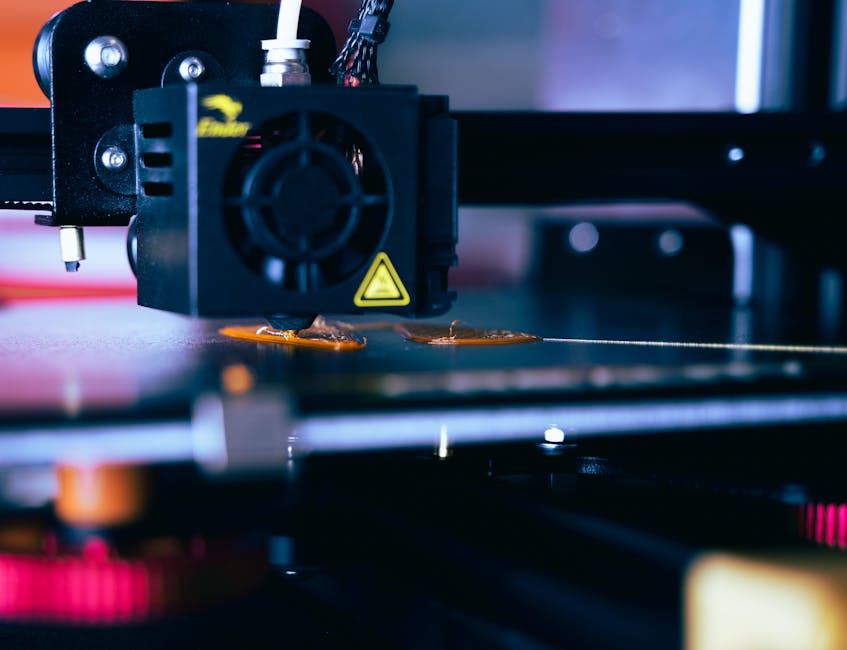
Abrasion is relentless: every rub, slide, and grit-filled contact slowly eats away at the surface of your 3D printed part. The good news is that the filament choice (and a few setup habits) can dramatically change how quickly that wear shows up.
This guide ranks the filaments you can pick from here for long-wearing, abrasion-prone parts, then breaks down the tradeoffs that matter most: wear behavior, moisture uptake, and printer/slicer settings that protect durability.
Start With the Right Material for Wear

Nylon (Best overall for abrasion resistance)
OVERTRUE Nylon 1kg 1.75mm Gray and OVERTRUE Nylon 1kg 1.75mm Black are the standout candidates for abrasion-resistant parts.
Why it wears well:
- Nylon tends to resist surface abrasion better than more brittle materials because it’s tougher and can better survive repeated rubbing.
- When printed with solid, consistent walls, it forms a durable “skin” that resists scuffing.
Tradeoffs you need to manage:
- Nylon is moisture-hungry. If it absorbs water, it prints less consistently and can weaken the final part—reducing real-world wear life.
- Nylon can be harder to print than PLA (often needing an enclosure and careful temperature control).
Where nylon is especially worth it:
- Sliding parts, snap-fit wear areas, cable guides, housings that contact other components, and general “contact surfaces” that see daily rubbing.
Flexible TPE (Good for impact and grip, weaker for pure abrasion)
Fiberlogy FIBERFLEX TPE 40D 0.85kg 1.75mm Red and Fiberlogy FIBERFLEX TPE 40D 0.85kg 1.75mm Navy Blue can be a smart choice when abrasion happens alongside flex and vibration.
Why it can work:
- TPE can tolerate impacts and movement without cracking.
- That “give” can reduce peak stress during rubbing.
Tradeoffs you should expect:
- Compared to nylon, TPE often wears faster under abrasive conditions (think grit or hard particle contact).
- Flexible materials can also creep over time under constant load, which changes how the surface contacts whatever it rubs against.
Best use cases:
- Protective bumpers, vibration-damping feet, grips, and parts where abrasion is paired with flexing or shock.
PLA (Usually the least durable for abrasion)
eSUN PLA CCT 3.00mm 0.5kg Blue and eSUN PLA CCT 3.00mm 0.5kg Grey are easy to print, but they’re typically the wrong direction for parts that need long-term abrasion resistance.
Why it tends to lose:
- PLA is more brittle than nylon and generally resists fewer repeated “scrape cycles.”
- Once the surface starts to chip or crack microscopically, abrasion speeds up.
Where PLA can still be acceptable:
- Short-life prototypes, covers with minimal rubbing, or parts where contact is mostly gentle and occasional.
Bottom line ranking for abrasion and long wear (from these options): Nylon > TPE > PLA.
Dryness and Storage Decide How Long Nylon Really Lasts

Use this process to keep nylon performance stable:
- Dry before printing: Run the nylon through a proper filament dryer and let it reach a consistent dry state.
- Seal after drying: Store it in a sealed container with desiccant so it doesn’t re-absorb moisture while you work.
- Minimize open-air time: Plan the workflow so you load, print, and unload efficiently.
- Watch for “wet” printing symptoms: Look for stringing, rough surface, or inconsistent extrusion—these often correlate with weaker parts.
If the part’s life matters (a moving contact surface, a sliding guide, a repeatedly rubbed housing), spending time on drying usually gives more durability than tweaking infill alone.
Print Setup That Improves Surface Durability
Abrasion happens at the surface. That means your settings should help you build a strong outer shell and reduce weak seams.
Key setup ideas for all three materials, with special emphasis on nylon:
- Prioritize strong walls over “just more infill.” A durable contact surface benefits most from thicker perimeters and a solid top/bottom where appropriate.
- Use appropriate layer height. Finer layers generally improve surface continuity, but the priority is consistent bonding—not simply smallest numbers.
- Tune speeds for bonding quality. Under-bonding can create early delamination or weak boundaries that abrasion exploits.
- Consider orientation to keep seams out of the rub zone. If the abrasion is on a face, try to orient print layers so the outer skin is continuous and seams aren’t directly exposed.
For nylon specifically:
- Plan for an enclosed environment if possible. Nylon is more sensitive to cooling and dimensional stability, and good thermal control improves bonding.
- Avoid over-aggressive cooling. Too much cooling can reduce layer strength.
For TPE:
- Tune for consistent extrusion. Flexible filaments often like slower movement and careful feed settings to avoid under-extrusion.
- Expect different wear behavior. The goal is stable contact and reduced chipping—not maximum hardness.
For PLA:
- Treat it as a convenience material, not a wear material. If you must use PLA, focus on geometry and protection (ribs, replaceable inserts, or keeping the rub zone minimal).
Slicer checklist (quick wins):
- Increase perimeters for the rubbing faces
- Use settings that improve layer bonding (rather than maximizing infill alone)
- Orient the part to keep weak seam locations away from abrasion
Choose Based on the Part’s Contact Type
Not all abrasion is the same. The “best” filament depends on whether your wear is mostly sliding, impacts, grit, or repeated flex.
Sliding contact and scuffing
Choose nylon when the part repeatedly slides against another surface, like guides, housings, rails, or sliding covers. Nylon’s toughness and surface durability help it resist scuffing longer than PLA, and it generally holds up better than TPE when grit is involved.
Abrasion plus flex (grips, bumpers, flexible interfaces)
Choose TPE when the contact forces involve flex, shock, or vibration. If the part needs to deform to absorb energy, TPE’s resilience can reduce cracking. Just recognize that it may not be the longest-lasting choice if abrasive particles are doing the damage.
Light-duty abrasion or replaceable parts
PLA can still be practical for low-contact wear areas, especially when the part is easy to replace. Nylon inserts or a design that separates the wear surface into a module can also let you keep PLA elsewhere.
How to Validate Wear Life Before Committing
The fastest way to avoid disappointment is to test where it matters: the rubbing face, with the same load and motion your real part will see.
A good validation approach:
- Print a small coupon that matches the contact geometry (not just a generic scraper).
- Run the same motion and check for early failure modes: surface dulling, chipping, seam separation, or groove formation.
- If nylon is the choice, confirm moisture control by re-testing if the filament sat out for a while.
This kind of “mini qualification” is especially valuable when you’re choosing between nylon and TPE—because the real winner depends on whether your wear is sliding abrasion, flex-driven wear, or mixed contact.
Practical Verdict: Best Pick for Abrasion Resistance
For long-wearing parts that endure rubbing, the best choice from the available candidates is nylon (OVERTRUE Nylon 1kg 1.75mm Gray or OVERTRUE Nylon 1kg 1.75mm Black). The biggest requirement is keeping it dry and printing with strong, consistent outer walls.
Pick TPE (Fiberlogy FIBERFLEX TPE 40D 0.85kg 1.75mm Red or Fiberlogy FIBERFLEX TPE 40D 0.85kg 1.75mm Navy Blue) when abrasion happens alongside flex, impact, or vibration.
Use PLA (eSUN PLA CCT 3.00mm 0.5kg Blue or eSUN PLA CCT 3.00mm 0.5kg Grey) only for low-wear or short-life parts, or when you can design a replaceable wear surface.
The one thing to do next: print a small test of the actual rubbing face (with your intended orientation) so you can confirm wear behavior before scaling up.
PriceIt3D may earn a commission when you buy through links on this page, at no extra cost to you. Affiliate notice.