Induction heating can push nearby materials far beyond comfortable temperatures for most plastics. In FDM printing, the key question isn’t “does it survive a moment of heat?” but “will it stay stiff and dimensionally stable while it’s hot?”
This guide breaks down what real heat resistance means for printed parts, then walks through the best filament choices—especially high-temperature options like PEEK, and practical alternatives like nylon and carbon-filled nylon—plus how to print and anneal for stronger, more heat-stable results.
What Heat Resistance Means for FDM (Softening vs Heat Deflection)
- Softening temperature (related to transitions like glass transition): As the polymer heats up, its internal structure changes and it begins to lose stiffness. Above that point, parts can deform under load, even if they don’t instantly melt.
- Heat deflection / stiffness under heat: Even if a material hasn’t reached “melting,” it may still flex a lot when hot. For functional parts, heat deflection is often the practical limit.
In FDM specifically, there’s an extra complication: your part is made of bonded layers. So “stays rigid” depends not only on the polymer chemistry, but also on layer adhesion, voids, and whether the polymer has time to relax stress while hot. That’s why two filaments with similar nominal thermal ratings can perform very differently after printing.
Also, induction heating doesn’t always mean the filament directly “feels” the hottest temperature. Often the heat is coupled through contact, convection, or radiation from something that’s being induced. That means surface temperature, part thickness, airflow, and contact pressure can matter as much as the filament’s thermal spec.
Best Filament Types for Induction Heat Resistance

-
eSUN ePEEK 0.25kg 1.75mm Natural (PEEK)
- Why it’s top-tier: PEEK is one of the few FDM filaments that can remain dimensionally stable at high temperatures for structural use when printed correctly.
- What it means for your part: Higher resistance to softening and better retention of stiffness, so the part is less likely to sag when heated.
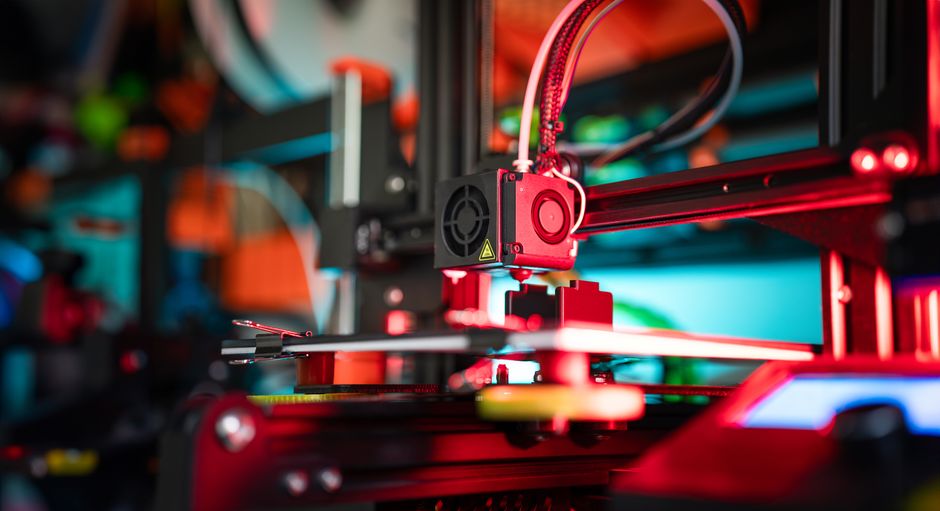
- Printability reality check: It’s demanding. You’ll typically need an enclosure, careful temperature control, and a print setup that can handle high nozzle and bed temperatures. Drying matters too, because contaminants and moisture can worsen layer bonding.
-
Carbon-fiber reinforced nylon (CFRN / CF nylon)
- Why it helps: Carbon fiber can boost stiffness and reduce creep compared to plain nylon. That’s valuable when the part is heated and under load.
- What it means for your part: Less flex and better “hold shape” behavior as temperatures rise.
- Printability reality check: Carbon-filled materials can be abrasive. Plan on hardened components (not just because it lasts longer, but because inconsistent extrusion ruins layer quality). Expect higher viscosity, and often slower, steadier printing to avoid weak layer formation.
-
OVERTRUE Nylon 1kg 1.75mm Gray (Nylon)
- Why it’s practical: Nylon is known for toughness and—when handled properly—improved heat performance after annealing.
- What it means for your part: It can be a strong choice when you need impact resistance and you’re willing to dry the filament and post-process.
- Printability reality check: Nylon is moisture-sensitive. If it absorbs water, it can print stringier and form weaker interlayer bonds, which dramatically reduces hot performance.
-
Polycarbonate (PC)
- Why it can work: PC can offer good toughness and heat stability relative to many common plastics, making it suitable for some warm-to-hot environments.
- What it means for your part: Better resistance to softening than commodity filaments, especially if layers bond well.
- Printability reality check: PC is notorious for warping and stress. Enclosure and stable temperatures are usually non-negotiable, and layer adhesion quality often decides whether it stays dimensionally stable when hot.
Printability and Setup Choices That Control Heat Performance
For induction-related projects, the best filament won’t save a print if layer bonding is weak or the part is full of internal stress. Focus on these factors.
-
Drying: If you’re using nylon or any moisture-sensitive polymer, dry filament properly before printing. Moisture can create bubbles and weaker bonding. Less bonding means more creep and faster loss of stiffness when heated.
-
Enclosure and temperature stability: For higher-temp plastics (especially PEEK and PC, and often filled nylons), enclosure temperature stability reduces warping and helps layers fuse consistently. Warping isn’t just cosmetic—warped parts can create micro-gaps that behave badly under heat and load.
-
Bed adhesion and stress management: Use a surface and adhesion approach that prevents edge lift. If a part lifts during printing, the final structure may look fine but will have poor interlayer contact.
-
Cooling and fan strategy: Over-cooling can lock in weak interlayer interfaces. Many high-temp materials benefit from minimal fan use (or carefully controlled cooling) to keep layers fused.
-
Nozzle and extrusion path: High-temperature and filled materials can be harsher on hardware. A poor flow path shows up as under-extrusion, gaps, and inconsistent layer geometry—each one reduces stiffness and heat resistance.
Annealing for “Metal-Like” Strength (What You Can and Can’t Expect)
Annealing can improve how a polymer behaves—particularly for semi-crystalline materials like many nylons. When you heat-treat the part correctly, you can increase crystallinity and reduce internal stresses, which often makes parts less prone to warping and sometimes more stable under heat.
But it’s important to set expectations:
- Annealing usually improves performance and stability, not miracles. You won’t get steel-like yield strength or fatigue behavior from an FDM polymer.
- Dimensions can change. Controlled annealing can reduce stress, but it may still shift tolerances.
- The “right” annealing depends on the polymer. Using an incorrect anneal temperature or time can weaken interlayer bonding or cause surface issues.
If your target is induction heat use, annealing is most helpful when the design relies on stiffness and shape retention, not just temporary surface survival. In other words: if the part needs to stay aligned while hot, annealing plus a strong print process is often more important than chasing the highest-temperature filament label.
Common Mistakes That Ruin Induction-Heat Performance
Even with the right material, these mistakes commonly lead to disappointment.
-
Testing the wrong temperature behavior: Many people look for “it doesn’t melt,” but the problem is often softening or creep under load. The part can be “solid” while still deforming too much.
-
Printing with weak layers: Heat resistance is only as good as layer adhesion. A print that’s easy to delaminate at room temperature will almost certainly fail sooner when hot.
-
Ignoring creep and stress relaxation: Polymers can gradually deform while hot even if they don’t fail immediately. If the application involves sustained load, design for lower stress and consider reinforced materials (like carbon-filled nylon).
-
Skipping thermal design: Wall thickness, ribbing, and how heat reaches the part affect performance. Sometimes improving geometry and reducing direct heating matters more than switching filament.
A simple way to validate is to run a practical test at the temperature range relevant to your induction setup, under the same load conditions your part will see. If the part holds its shape and doesn’t creep excessively, you’ve solved the real problem—not just the melt point.
Who Should Choose Which Filament
If you want the most heat-capable option for demanding induction-adjacent structural roles, PEEK is the strongest starting point—especially if you can handle an enclosure and a high-temperature workflow (eSUN ePEEK 0.25kg 1.75mm Natural).
If you want a practical balance of stiffness and heat stability without going all-in on high-temperature printing, carbon-fiber reinforced nylon is often the best “engineering feel” path.
If you need toughness and you’re willing to dry properly and anneal to improve stability, nylon can be a strong choice—particularly for parts that benefit from post-processing (OVERTRUE Nylon 1kg 1.75mm Gray).
For parts that need toughness and heat stability but can’t tolerate the complexity of PEEK workflows, PC can work well when printed in a controlled, enclosed setup.
The next step is deciding whether your part’s real failure mode is softening, creep, or layer separation—and matching filament + print quality to that failure mode before iterating on annealing.
PriceIt3D may earn a commission when you buy through links on this page, at no extra cost to you. Affiliate notice.