Heat and harsh chemicals punish soft plastics like PLA and basic PETG fast. If you want parts that stay tough, resist creep, and don’t turn brittle after exposure, the filament choice matters as much as the printer setup.
Below is a practical way to think about heat + chemical resistance, with comparisons of PETG/ABS against engineering plastics—Nylon, Polycarbonate, and PEEK (plus related PET variants)—including what that means for warping, reliability, and post-processing.
PETG and ABS Beyond Basics
PETG
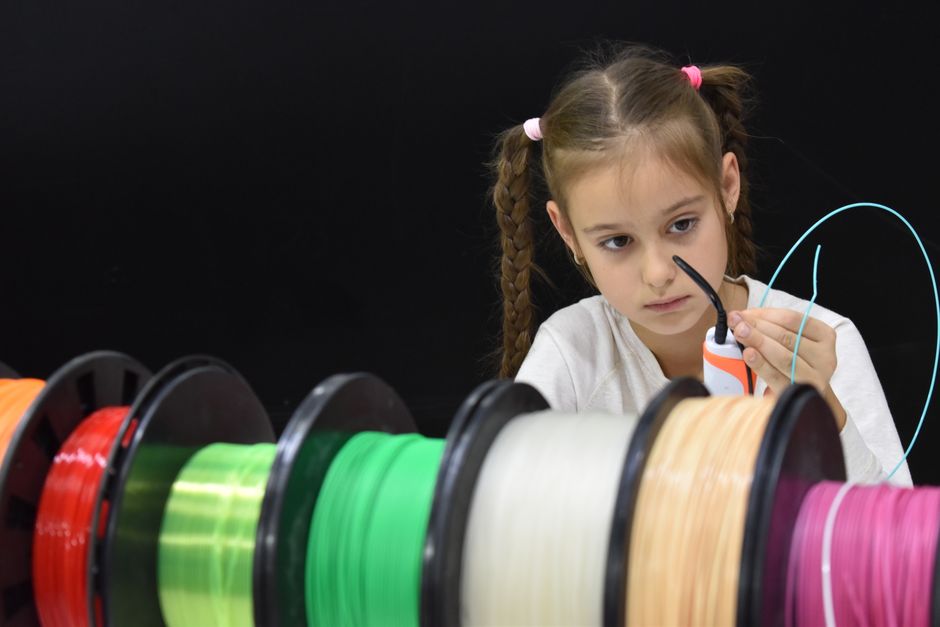
PETG usually offers better toughness than PLA and tends to hold up well against everyday handling. For heat, it generally fares better than PLA, but it still can soften enough under load that dimensional accuracy and stiffness drift over time.
For chemical resistance, PETG often performs well with water and mild exposures, but stronger solvents and long-term contact can lead to surface dulling, swelling, or embrittlement—especially if your part is under stress.
ABS
ABS is tougher than many hobby plastics and can be more heat-stable than PLA. With ABS, reliability often comes down to thermal stress management: parts warp if the printer setup and cooling are off.
ABS can handle certain chemicals better than some softer plastics, but it is still vulnerable to many aggressive solvents and long-term exposure scenarios. If your part will be splashed, wiped, or soaked repeatedly, you’ll generally need to think beyond “ABS should be fine” and validate with a small test.
Bottom line for PETG/ABS: they’re great when the chemical exposure is mild and heat is moderate, but if you’re targeting sustained heat and harsher chemicals, engineering plastics will save you reprints.
Nylon: Toughness With Moisture Management
When people describe nylon “taking abuse,” they’re usually referring to a combination of toughness and damage tolerance. The flip side is that nylon is hygroscopic: it readily absorbs moisture from the air, which affects extrusion quality and can hurt layer adhesion.
If you’re exploring nylon for heat/chemical applications, OVERTRUE Nylon 1kg 1.75mm Gray is an example of the kind of nylon filament you’ll typically treat like an engineered material: it benefits from good drying habits and consistent printing parameters.
Strengths
- Toughness and impact resistance for parts that get bumped, flexed, or loaded.
- Often better performance than PLA for many “everyday harsh” scenarios where chemical exposure isn’t extremely aggressive.
- Tends to machine and sand more cleanly than some very rigid plastics (useful for post-fitting).
Weaknesses
- Moisture sensitivity: wet filament can produce bubbles, poor layer bonding, and inconsistent dimensions.
- Warping risk: nylon prints better with controlled conditions (enclosure or strong draft control), or you may see edge lift and dimensional drift.
- Chemical compatibility is not universal: “resists chemicals” depends on which chemical and how long it contacts the part.
Post-processing needs are usually moderate: the most important “prep” is drying and printing for strong layer adhesion. Finishing (sanding, light machining) is often manageable, but final accuracy still depends on how stable the part stayed during printing.
Polycarbonate: Impact Strength That Demands Enclosures
Polycarbonate (PC) is a popular choice when you need rigidity plus strong impact resistance, especially for parts that must handle heat without quickly losing structural integrity.
PC’s biggest practical advantage is that it can stay strong under demanding mechanical loads. The tradeoff is that PC is difficult to print without careful environmental control.
Strengths
- High toughness and good resistance to cracking under impact.
- Often a better choice than PETG/ABS when heat and mechanical stress happen together.
- Good candidate for parts like protective covers, housings, and mechanical components where deformation must be limited.
Weaknesses
- Warping is common if the printer isn’t enclosed and thermally stable.
- Post-processing can be more sensitive: aggressive heat, solvents, or rough handling can cause stress issues.
- Chemical resistance varies by chemical; some cleaners and solvents can still attack the surface or stress-crack susceptible regions.
For post-processing, the key idea is controlled finishing. Light sanding and careful machining are typically more realistic than “quick and rough.” And if your part will be under load, you’ll want to plan for how any finishing steps affect internal stresses.
PEEK and PET Variants: Highest Heat and Chemical Performance
If you’re chasing the highest odds of holding shape under heat and resisting a broader range of chemicals, PEEK is the benchmark most people are trying to approach.
PEEK is extremely capable, but it’s also demanding: you need appropriate printing conditions and realistic expectations around cost, machine capability, and part finishing.
For a concrete example of the material class, eSUN ePEEK 0.25kg 1.75mm Natural represents the kind of PEEK that’s used for tough, high-performance parts.
Strengths
- Excellent heat performance for parts that see sustained warmth.
- Strong baseline resistance across many chemical exposure scenarios (still not universal, but generally more forgiving than common plastics).
- High mechanical stability helps parts resist creep under load.
Weaknesses
- Printing often requires specialized hardware and disciplined process control (think consistent extrusion and stable thermal conditions).
- Post-processing may be more “process-heavy”: depending on your design, you may need machining or careful finishing rather than quick tweaks.
- Too much DIY finishing with heat/solvents can backfire—plan the workflow before committing.
What about PET variants? “PET” filaments aimed at engineering use are usually positioned between mainstream plastics and true engineering polymers. In practice, they can be useful for moderate heat/chemical needs where you want a tougher alternative to PLA, but they generally won’t match PEEK’s combination of temperature stability and chemical tolerance.
How to Choose the Best Filament for Your Heat and Chemicals
Picking the “best filament” depends less on marketing terms and more on your exposure and constraints. Use this checklist to narrow down nylon, polycarbonate, PEEK (or PET variants) without guessing.
- Identify the chemical exposure (even a rough category helps): water, oils, alcohols, acids/bases, or solvents/cleaners.
- Decide whether the part is just warm or also loaded while warm (heat under load is where many plastics creep).
- Choose the toughness direction: nylon leans damage-tolerant, PC leans rigid-impact, PEEK leans stability under demanding conditions.
- Plan for warping control: nylon and PC usually benefit strongly from enclosures; PEEK generally expects serious process discipline.
- Factor moisture needs: nylon and similar hygroscopic materials often require drying to get consistent strength.
- Decide how much post-processing you can tolerate: from light sanding (easier) to machining and stress-aware finishing (harder).
Next, align your printer setup and finishing approach with the material you choose.
- Dry filament before printing if the material is moisture-sensitive (especially nylon).
- Use draft control: enclosure, stable air temperature, and reduced cooling gradients help prevent warping and weak layers.
- Print for adhesion and dimensional stability, not just “looks good”—layer bonding is where long-term reliability is won or lost.
- Match post-processing to the polymer: prioritize gentle finishing and avoid aggressive heat or chemical exposure unless you’re sure it won’t compromise the part.
- Run small test coupons for your exact chemicals and temperatures when the application matters—chemical resistance is too specific to assume.
Practical verdict: if you need good toughness with better heat/chemical headroom than PETG/ABS and you can manage drying, start with nylon. If you need a sturdier, more impact-resistant housing and can control warping, polycarbonate is a strong step up. If your priority is maximum heat stability and higher confidence in tougher chemical environments—and your machine/process can handle it—PEEK is the safest “target.” When the requirement is moderate but not extreme, PETG or ABS can still be valid, but they’re best treated as a baseline rather than the final answer.
PriceIt3D may earn a commission when you buy through links on this page, at no extra cost to you. Affiliate notice.