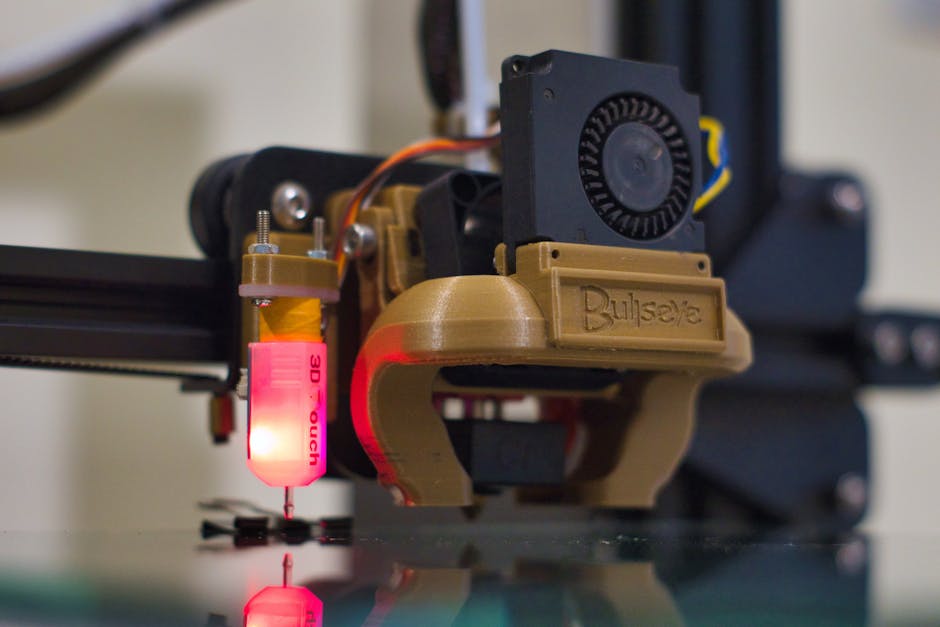
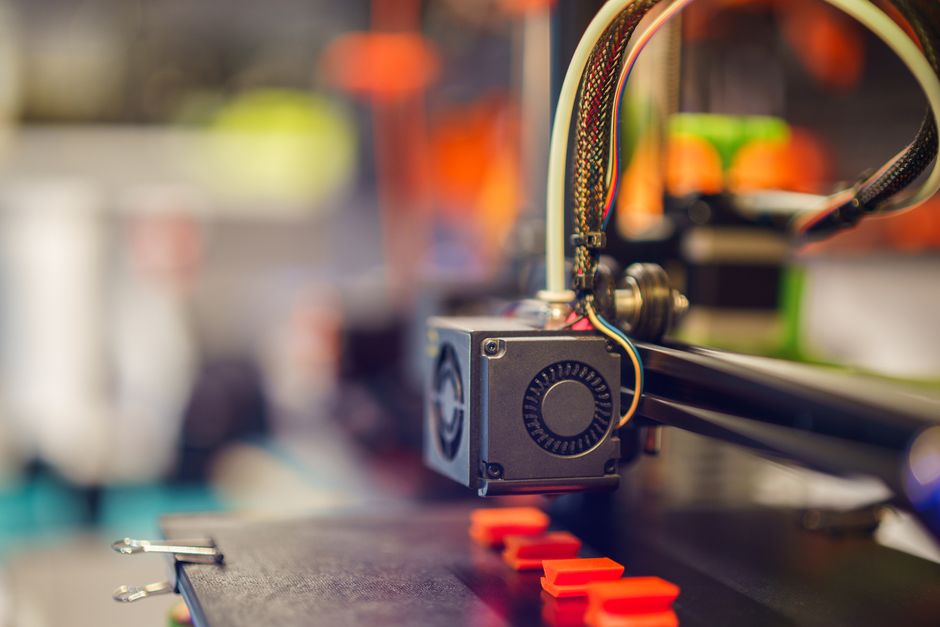
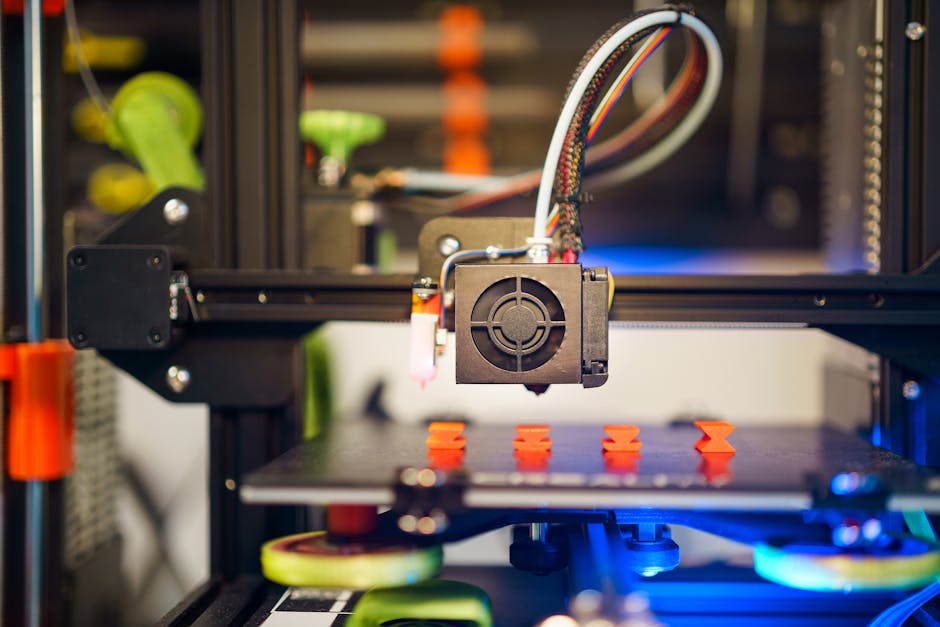
Upgrading the extruder is one of the few 3D printer changes that can affect nearly everything at once: how reliably filament feeds, how clean your retraction looks, and how much tuning you’ll have to do. This guide breaks down the tradeoffs between a direct drive extruder and a Hephesto-style quad gear extruder upgrade for Ender-style setups like Creality Ender 3 V2.
You’ll get a practical way to choose based on your prints—especially if you’re moving between PLA and more challenging materials like TPU, PETG, or abrasive blends. We’ll also cover what typically changes in calibration when you switch extruder designs.
Direct Drive Extruder for Ender-Style Printers

Strengths (what improves)
Direct drive typically offers:
- Better retraction performance: Because the filament doesn’t have as much unsupported length between the drive and nozzle, retraction usually causes less oozing and stringing from elastic filament stretch.
- Strong control for flexible materials: TPU and other flexible filaments often benefit from the more direct push. The motor can “grab and guide” the filament without relying on Bowden tube friction to tame it.
- More predictable extrusion at varying speeds: With less filament lag, the printer can respond more consistently when you change speed mid-layer.
Weaknesses (what can get harder)
Direct drive can add new constraints:
- Reduced effective acceleration headroom: Mounting a motor on the toolhead increases moving mass and changes how the motion system behaves. On some Ender-style frames, this can require lowering acceleration/jerk (or accepting more ringing) to keep dimensional accuracy.
- More tuning variables for retraction and pressure: The improvement in response can also make “old” retraction and pressure settings feel wrong. You’ll likely re-tune retraction distance and linear advance/pressure compensation.
- Cable drag and management: The toolhead wiring must move every print. Without a well-routed cable chain and strain relief, you can introduce intermittent drag, skipped steps, or subtle print artifacts.
Torque reality check (why it still matters)
A common expectation is that direct drive “has more torque.” In practice, the torque at the filament depends on gear ratios, motor current/driver limits, and mechanical load (idler tension, friction, alignment). Direct drive usually improves control because the filament path compliance is lower, but it doesn’t magically remove motor limits—especially if you push high flow rates.
Hephesto-Style Quad Gear Extruder Upgrade

Strengths (what improves)
You typically see:
- Better filament grip and consistency: Quad gear designs distribute contact and improve how reliably the drive transmits motion into the filament, which helps with slippery materials and abrasive blends.
- Effective force leverage: Gear reduction can increase effective torque at the filament. That can make high-feed scenarios feel more stable than a simpler single-gear direct push (especially when filament friction changes with temperature).
- Usually less moving-cable complexity: If the motor stays where it was, cable drag on the moving carriage is often reduced compared with a true direct drive toolhead.
Weaknesses (what can get harder)
The tradeoffs are usually:
- Retraction can be less “clean” if the filament path stays long: If your setup still uses a Bowden tube length similar to stock, the retraction response is influenced by filament stretch and tube compliance. Quad gears help extrusion drive reliability, but they don’t always shrink the compression/release behavior that causes stringing.
- Potential over-tuning risk: A stronger extruder can make your old retraction and pressure settings overshoot. You may get blobbing if pressure compensation isn’t recalibrated.
- More attention to alignment and setup: With multi-gear feed systems, small misalignment or idler tension differences can lead to uneven feeding or grinding—sometimes only noticeable at higher speeds.
Torque reality check (why it feels strong)
Quad gear upgrades often feel “torquier” because they increase effective torque at the filament through gearing and improve how much of the motor’s motion turns into actual filament movement. That’s great for overcoming friction variation in the drive path. But the rest of the system—tube length, nozzle backpressure, and hotend flow capability—still limits how fast and how far you can move filament without leaving retraction artifacts.
Calibration Changes You Should Expect
Switching between these designs changes more than “e-steps.” It changes how the printer responds over time: how quickly filament starts and stops moving at the nozzle.
Most calibration changes fall into these buckets:
- Extrusion measurement (rotation distance/e-steps)
- Retraction behavior (distance and speed)
- Pressure compensation (linear advance/pressure advance)
- Motion limits (especially with direct drive toolhead mass)
Here’s a practical setup flow that keeps you from chasing your tail.
- Recalibrate extrusion distance/rotation distance (E-steps): Run a filament test move and measure how far filament actually feeds. Quad gear upgrades can have different effective ratios than stock, and direct drive often changes drive mechanics and friction.
- Set baseline hotend temps and fans: Use your normal temperature range for the filament you’re tuning. Large temperature swings can change nozzle backpressure and how much stringing appears, making retraction tuning misleading.
- Tune retraction distance first, then retraction speed: Start with conservative retraction values and adjust in small steps. If you reduce stringing but start seeing under-extrusion or gaps, you’ve likely gone too far on distance or too aggressive on speed.
- Re-tune linear advance/pressure advance (if your firmware supports it): This directly addresses pressure lag, which becomes noticeable when extruder response characteristics change. Tune it with a small model designed for pressure behavior.
- Verify flow rate / extrusion multiplier: If you changed driving consistency (quad gears) or toolhead response (direct drive), your measured flow may shift. Calibrate a basic single-wall or cube dimension test.
- Adjust travel speed and acceleration if you install direct drive: Add the motor and you add mass. If ringing or corner artifacts show up, lower acceleration/jerk (or increase stabilization) rather than forcing faster speeds.
- Stress-test cable drag and motion range: For direct drive, confirm the cable chain isn’t pulling tight at extreme positions. Do a quick motion test (nozzle cold) to catch intermittent drag before you waste filament.
Which Extruder Upgrade Fits Your Prints?
If you’re choosing between direct drive and a Hephesto-style quad gear upgrade, match the upgrade to what you struggle with today.
-
Choose direct drive if you prioritize retraction quality, stringing reduction, and flexible filament reliability. It’s especially compelling when TPU, TPE, or other flexible materials are part of your workflow, and you’re willing to re-tune pressure and possibly reduce motion aggressiveness to account for toolhead mass.
-
Choose a Hephesto-style quad gear upgrade if your main goal is strong filament grip and stable extrusion while keeping the printer’s overall motion setup closer to stock. It’s also a good fit if you want less moving-cable complexity than a full direct drive conversion, or you’re seeing inconsistent feeding without necessarily needing the best possible retraction feel.
The simplest rule: if your prints are suffering mainly from stringing/retraction behavior and you want better control at the nozzle, lean direct drive. If they’re suffering from inconsistent feeding or loss of grip, lean quad gear.
Once you pick an option, don’t reuse your current retraction and pressure settings “as-is.” Calibrate E-steps/rotation distance, then retraction, then pressure compensation. That order prevents the most common frustration: fixing stringing with retraction only to discover flow is now off because the extrusion system changed.
PriceIt3D may earn a commission when you buy through links on this page, at no extra cost to you. Affiliate notice.